48 Mixed Fabric Texture Backgrounds for Authentic Design
Why Texture Beats Flat Color in Modern Design
Flat color backgrounds served their purpose for years, but audiences crave something more tangible now. They want designs that feel like they have weight, history, and character. That's exactly where the 48 Mixed Fabric Texture Backgrounds Bundle steps in. This collection isn't just a set of pretty patterns—it's a toolkit for designers who understand that visual texture creates emotional connection.
Think about the last time you touched raw denim or ran your fingers across woven linen. There's an immediate sensory response. These backgrounds translate that physical experience into digital and print work. The bundle includes everything from distressed denim washes to delicate embroidered florals, each one carrying the kind of visual depth that flat vector patterns simply cannot replicate.
What's Actually Inside This Collection
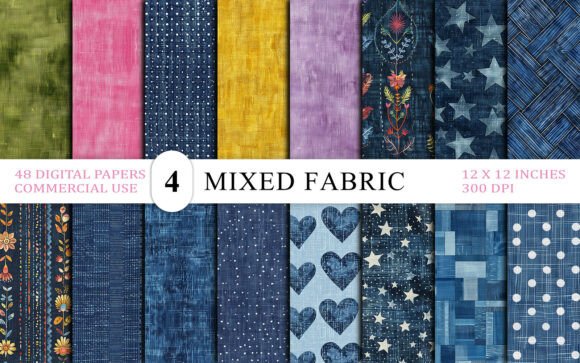
Let's get specific about what you're working with. The Mixed Fabric Texture Backgrounds Bundle delivers 48 unique JPG files, each sized at 3600x3600 pixels. That translates to 12x12 inches at 300 DPI, which means these files handle print production without breaking a sweat. No pixelation on large-format prints. No quality loss when you crop into a detail.
The variety within this textile bundle JPG collection covers serious ground:
- Denim backgrounds ranging from raw selvedge to heavily washed indigo
- Woven linen textures with visible thread structure and natural imperfections
- Printed textiles featuring hearts, stars, and geometric motifs
- Grunge cloth overlays that add weathered character without overwhelming your content
- Embroidered floral fabrics with handcrafted detail and subtle dimension
Each file downloads instantly as a ready-to-use JPG. No extraction headaches, no confusing file structures. Drag, drop, design.
Scrapbooking and Paper Crafts
Scrapbook textile paper remains one of the most popular applications for fabric-inspired digital backgrounds. These files print beautifully on cardstock and matte paper, giving handmade albums and memory books an authentic textile quality. The seamless printable patch designs work particularly well for layered compositions where you need backgrounds that don't compete with photos and embellishments.
Brand Identity and Packaging
Small business owners building artisan or lifestyle brands find enormous value in realistic textile overlay backgrounds. A handmade soap company using a linen texture as its primary brand backdrop communicates craftsmanship before a customer reads a single word. A children's clothing line leveraging kids fabric texture patterns in its marketing materials creates immediate visual alignment with its product category.
The rustic cloth texture aesthetic works especially well for brands in the home goods, outdoor lifestyle, sustainable fashion, and farm-to-table food spaces. These aren't trendy choices—they're strategic ones that connect brand identity to tangible product qualities.
Digital and Web Design
Web designers use these backgrounds as hero image overlays, section dividers, and subtle page textures. The key is restraint. A denim wash pattern behind a pricing table adds warmth without sacrificing readability. A woven pattern pack texture behind testimonial sections creates visual interest that keeps visitors scrolling.
Social media content creators rely on these files constantly. Instagram posts, Pinterest pins, and Facebook covers gain immediate visual distinction when built on textile backgrounds rather than generic solid colors. The handmade style fabric aesthetic performs particularly well in lifestyle and DIY content niches where audiences expect authenticity.
Editorial and Publishing
Magazine layouts, book covers, and newsletter designs benefit from the editorial design applications of fabric textures. A retro fabric design background gives feature articles a vintage editorial feel. Indie textile paper patterns work beautifully for zine-style publications and independent publishing projects where budget meets creative ambition.
Choosing the Right Texture for Your Project
Not every fabric texture suits every project. Here's how experienced designers evaluate fit:
- Match texture weight to content density. Heavy grunge textures work behind minimal text layouts. Subtle linen weaves support content-heavy designs without visual competition.
- Consider your color palette first. Pull dominant colors from your existing brand assets, then select textures that complement rather than clash.
- Test at actual size. View textures at the dimensions they'll appear in your final design. A texture that looks beautiful at full zoom might feel too busy at thumbnail size.
- Evaluate contrast ratios. Overlay your text colors on the texture and verify readability. Accessibility matters, and even beautiful backgrounds fail if they make content unreadable.
Font Pairing and Typography Considerations
Textured backgrounds interact directly with your typography choices. Clean sans serif fonts tend to pair well with busy fabric patterns because their simplicity creates visual balance. Serif fonts with moderate contrast work against subtle textures like linen and raw cotton. Script fonts and handwritten typefaces can disappear into embroidered or heavily patterned backgrounds, so use them selectively and always test legibility.
When building brand identity assets on textile backgrounds, establish a consistent type hierarchy. Your display font should maintain clear separation from the background texture. Consider adding a semi-transparent overlay or solid color panel behind critical text elements. This approach preserves the texture's character while ensuring your message lands with full clarity.
Commercial Licensing and Practical Notes
This bundle arrives commercial use ready, which removes a significant barrier for professional designers and business owners. You can incorporate these textures into client work, product packaging, merchandise, digital products, and marketing materials without licensing complications. The high-resolution JPG format ensures compatibility across every major design application—Photoshop, Illustrator, Canva, Affinity, and others handle these files without conversion.
For print applications, the 300 DPI resolution at 12x12 inches covers most standard project requirements. If you need larger formats, these textures scale reasonably because the fabric weave patterns maintain visual coherence even at reduced resolution. That said, always proof critical print jobs at actual size before committing to a production run.
Final Design Observations
The real strength of this Mixed Fabric Texture Backgrounds Bundle lies in its versatility across project types and skill levels. Professional designers appreciate the commercial licensing and production-ready resolution. Hobbyists and crafters value the instant download format and the breadth of styles included. Entrepreneurs building their own marketing materials find that textile backgrounds add perceived value and visual sophistication that generic stock backgrounds cannot match.
Texture communicates authenticity in ways that clean, minimal design sometimes struggles to achieve. When your project calls for warmth, handcraft character, or visual depth that feels earned rather than applied, these 48 backgrounds deliver exactly that. Keep them in your design assets library and reach for them whenever flat color feels insufficient.